


Preparing you for the Future
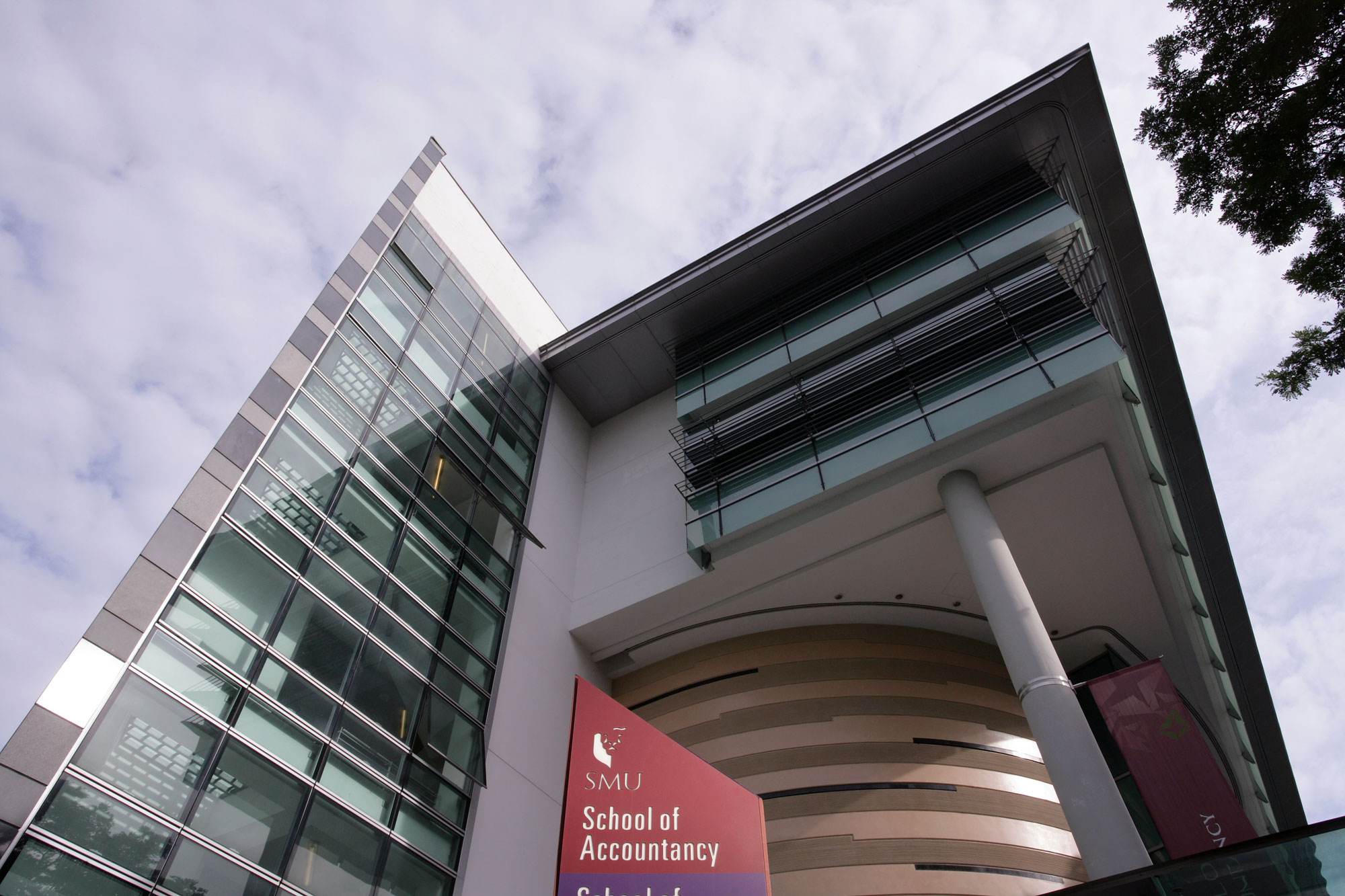
Is Technology the Future of Accounting?
By Dean of School of Accountancy, Lee Kong Chian Chair Professor Cheng Qiang
Accounting is the language of business. More and more professionals, whether in the area of finance or strategy or marketing, realize that a lack of accounting knowledge is an important hurdle they have to overcome if they want to do their job better and if they want to further advance in their organization. This is going to be more important in the future when more data will be available and shared within the organization. However, how accounting is carried out, has been and will further be, affected by technology.
In the last couple of years, more and more people quote a research paper published by a couple of computer scientists – Frey and Osborne (2013) on how quickly various jobs are going to disappear because of automation and technology. According to these two authors, accounting is in grave danger. I have to admit that as a researcher, I have great difficulty understanding how the authors model the accounting job and accounting profession and how they arrive at their conclusion. If the researchers cannot correctly model the jobs of accounting professionals, they cannot arrive at correct conclusion. This issue is what researchers refer to as “internal validity” – the conclusion might be wrong because of incorrect modeling and analyses.
Despite the issue with this study and its conclusion, no one will object the statement that technology is going to change accounting profession. The more important questions are (1) how will technology change accounting and accounting profession, and (2) what should accounting firms and educators do in response?
With the improvement in technology and computer power, we have observed that both corporations and accounting firms start to embrace technology and take advantage of the improvement. Take a large multinational corporation as an example. In the past, it has to send a group of accountants to each of its subsidiaries to ensure that the data is collected, processed, and communicated with the headquarters. Nowadays, large corporations generally have a large and comprehensive accounting information system that automatically collects and processes data. Data are more abundant than ever. In this process of the transformation, the accountants who just do the routine job and collecting data will likely lose their jobs. At the same time, more accountants are needed to process the data and generate useful information for top managers to facilitate their decisions.
Take auditing as an example. In the past (and now still), staff members in accounting firms need to do sampling and collect data from their clients to ensure that they process the transactions and prepare the financial statements correctly. Now and in the future, auditors do not need to do sampling and they can have access to all the data their clients have. Thus, the staff members who used to look through the piles of papers and collect samples of documents will soon be obsolete. Yet, more people will be needed to process the vast volume of data and identify red flags that might indicate inappropriate accounting treatments. Some accounting firms have started to develop such programs and change their audit teams accordingly.
In short, mundane, tedious, and low level work will be automated. However, accounting professionals will play a more important role in processing and generating information that are important for corporate decisions and financial reporting.
Such changes suggest that future accounting professionals need to better develop skills that are required in the future – critical thinking skills, the ability to make professional judgement, and communication skills, among other things. Memorizing accounting standards and being able to record journal entries for transactions will not be sufficient. That is what we are doing in SOA. We help the students to develop important skills in small classroom discussions, group projects and presentations; we challenge our students with important questions, and provide them with opportunities to have a dialogue with professionals on the current and future status of accounting professions. We want our students to be future ready.
To speak to our admissions officer regarding your eligibility for the MSc in Accounting (Data and Analytics) programme, do sign up for an admissions chat here.
