

On a Quest to Pursue Knowledge
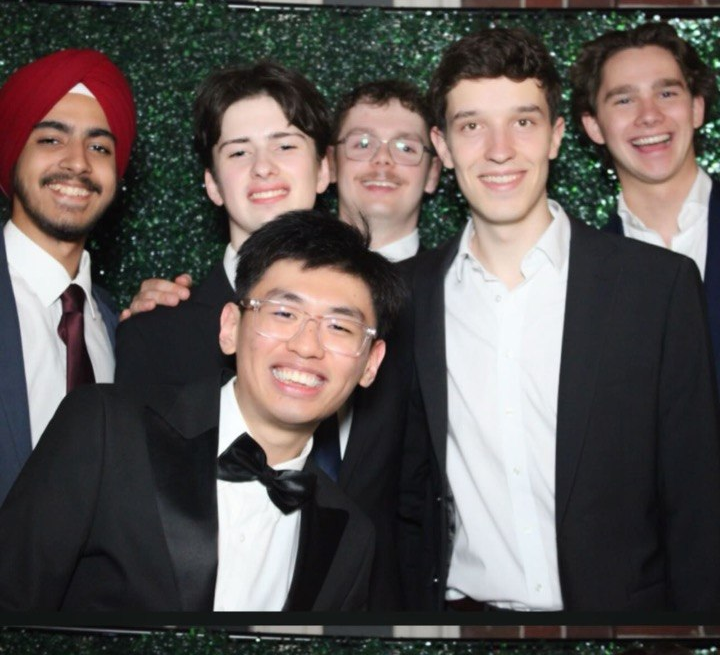
SMU Bachelor of Accountancy student James Chia may only be in his final year, but has set his sights on his career goal - research and academia. Even before graduation, James has successfully secured a pre-doctoral fellowship at the Graduate School of Business at Stanford University. We interviewed James to find out more about his plans following his graduation this July.
- Congratulations on securing your pre-doctoral fellowship at the Graduate School of Business, Stanford University. Can you share with us more about this programme and what you will be learning under this fellowship?
The predoctoral fellowship at Stanford Graduate School of Business is a full-time research position designed to prepare students for a PhD. I will be on the dedicated research track in finance, working closely with a faculty member on projects in financial intermediation.
Through this experience, I aim to deepen my understanding of empirical methods, sharpen my economic intuition, and formalise such intuition mathematically. In addition, fellows may take graduate-level coursework, which will further strengthen my theoretical and quantitative foundations.
- What attracted you to pursue a career in the field of academia?
My interest in academia was first shaped by my experience with professors at SMU. While accounting is often viewed as a discipline focused on the application of rules and standards, my professors consistently pushed us to consider the underlying rationale and the subjectivities inherent in accounting.
This was particularly influential in shaping my interest in finance, where accounting information governs the measurement of economic events that influence decision-making in market participants. Understanding these underlying rationales provided me with a more nuanced appreciation of how real-world frictions can shape outcomes beyond the theoretical.

At SMU, we were encouraged to begin with a “perfect world” model and then progressively introduce real-world complexities. This helped us to dissect problems in a structured manner and better understand the underlying triggers. For instance, in a pristine setting with complete markets and perfect information, accounting may not matter as much. However, once complexities such as information asymmetry, agency problems, and incomplete markets are introduced, accounting becomes central as a mechanism for information production, monitoring, and contracting.
This approach allows us to better understand the underlying rationale behind the role of accounting and how its function evolves in response to changing economic and informational environments. I find such systematic manner of thought highly satisfying in its rigor and intuitiveness, which ultimately motivated me to pursue a career in academia.
- You plan to pursue your pre-doctoral studies immediately after graduating with your Bachelor of Accountancy at SMU in August this year. How do you think your time in SOA has prepared you to take up this challenge?
My time in SOA has helped me develop a strong foundation in understanding economic and financial models, particularly in evaluating when prescribed models capture real-world behaviour and when to apply a more nuanced view.
Additionally, I was given the opportunity to spend my junior year at Harvard University with the support and encouragement of Professor Seow Poh Sun (SOA) and Professor Sun Jian (LKCSB). During my time there, I took graduate-level courses in finance as well as mathematics courses, which further strengthened my theoretical and quantitative foundations. I also completed a research assistantship with the Finance Unit at Harvard Business School, where I contributed to a faculty working paper. These experiences exposed me to a more research-oriented academic environment and further strengthened my interest in pursuing academia.
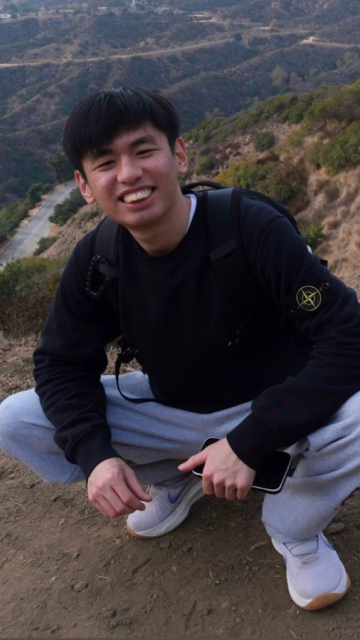
- Where do you see yourself after completing your fellowship with Stanford?
Following the completion of the fellowship, I hope to pursue a PhD in finance, with a focus on financial intermediation and asset pricing. I am particularly interested in understanding how information, incentives, and market frictions interact in shaping financial markets and institutions. In the long run, I hope to pursue a career in academia as a finance professor, where I can contribute to research and teach.