

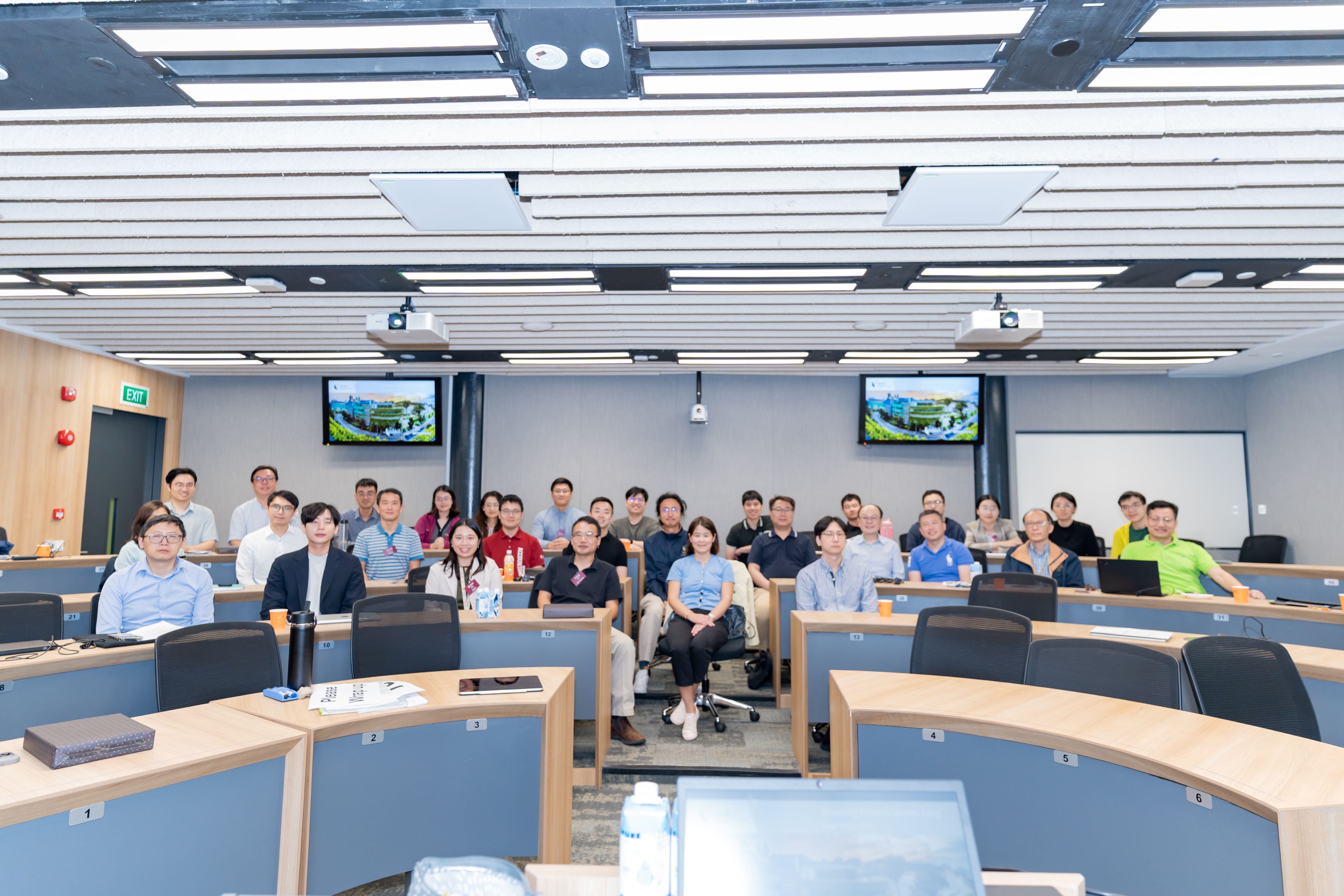
Among the conferences regularly held by Singapore Management University’s School of Accountancy is the Accounting Research Summer Camp, where junior and more experienced researchers come together to share ideas and stimulate debate through presentations of their work in the form of papers and discussions on the same, and adding to the robustness of accounting research.
The conference was held on 23 May 2025, and connected SMU PhD candidates and faculty with their peers from other institutions to cover a breadth of accountancy issues and topics.
Four papers by SMU were presented, covering topics ranging from how whistleblowing regulations affect accounting workforce distribution, to the impact of zero corporate income tax. The day’s insightful discussions will allow the papers’ authors to refine their research and increase its robustness, ensuring that these papers go on to be even more impactful when they are finally published.
Understanding how firms react to ESG reputational damage
With the increasing importance that consumers and stakeholders place on a firm’s reputation for sustainability, firms naturally shift their advertising strategies following Environmental, Social and Governance (ESG) incidents. This behaviour is what “Turning Invisible: Do Firms Change Their Advertising Strategies after ESG Reputational-Damaging Events?” sets out to understand.
The first presentation of the day, Yin Wang, Assistant Professor of Accounting at SMU School of Accountancy, shared the layers of complexity behind a firm’s response to such a scenario. Immediately after an incident, firms show a decrease in advertising spending as a means to reduce visibility and avoid unnecessary attention from consumers.
“The effect is more pronounced in locations where stakeholders have a stronger sustainability preference and awareness,” explains Professor Wang, a point which firms up the fact that this behaviour is in fact a response to the ESG incident.
The impact of whistleblowing regulation in labour distribution
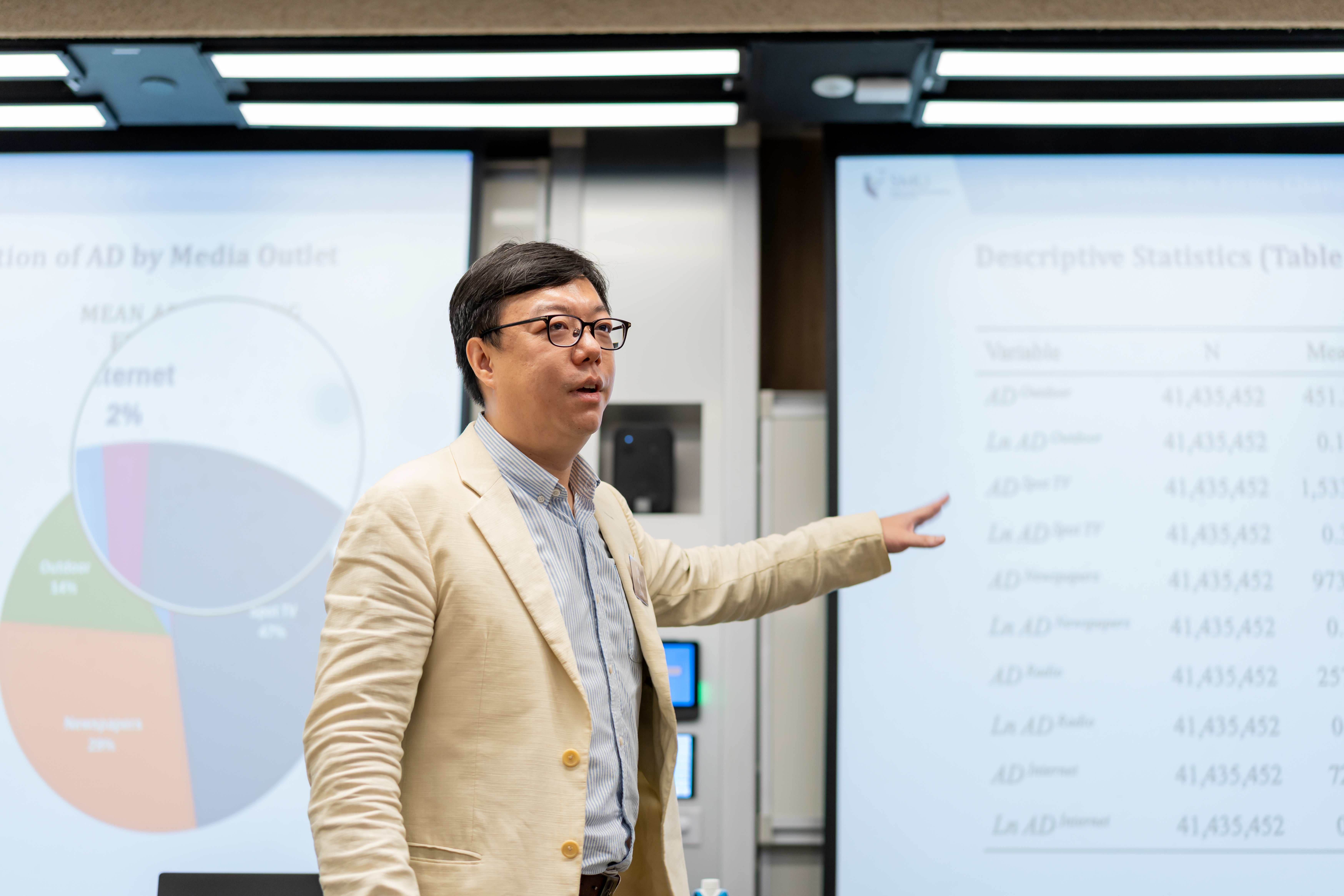
The second presentation of the day gave insight into how foreign firms in the US adjust their distribution of accountants across countries to minimise their exposure to whistleblower risk.
Presented by Rencheng Wang, Associate Professor of Accounting; Lee Kong Chian Fellow at SMU School of Accountancy, the paper, titled “Whistleblowing and Regulatory Arbitrage in Labor: Accountants of Foreign Firms in the US” showed how firms adjusted the distribution of their accountants across each branch following the United States Securities and Exchange Commission (SEC) Whistleblower Programme introduced in 2011.
In their research, Professor Wang and his co-authors found that there is a noticeable set of firms who shrink their US accounting teams to mitigate whistleblowing risks. This behaviour was found to be greater with firms that operate in countries that have less regulatory cooperation with US authorities, or have higher corruption exposure.
These results help in understanding the reach that US regulations have beyond the country’s borders, while also contribute to the existing literature on labour research in the accounting sector.

A world with zero corporate income tax and its implications
The third paper, “What Happens With A Zero Corporate Tax? Evidence from a Corporate Payout Tax System”, examined the economic effects of a system where corporate income is not taxed. The research comes at a time where payout taxes are a major topic of discussion when it comes to tax reform considerations in the US as well as many other countries.
David Samuel, Assistant Professor of Accounting at SMU School of Accountancy, presented the findings, which looked at the results of such a tax reform in Latvia that postponed the taxation of corporate profits once they were distributed as dividends. In short, the company’s payouts to stakeholders were taxed, rather than the company’s profits.
The authors found that Latvian firms reduced their capital investment under this payout tax compared to “control” firms from Estonia and Lithuania, Baltic states in close proximity that share many of the same major trade partners in the European Union.
While this might sound like a negative, the reduction in investment is shown to enhance efficiency, which suggests that payout tax reduces overinvestment tendencies that are fostered by the more traditional corporate tax system, Professor Samuel explains.

In addition, the fact that debt levels among Latvian firms declined following this reform indicates that the payout tax system removes the debt bias that is inherent in traditional corporate income tax systems, reducing firms’ incentives for debt financing.
These findings add to the relatively scarce literature on the effects of payout taxes, and inform especially policy makers on the policies to be implemented when transitioning from a more traditional corporate tax system to one where taxes are implemented on corporate payouts.
How randomised on-site inspections affect shareholder value
The final presentation for the conference, titled “Randomized On-Site Inspections and Shareholder Value” was made by Heng Yue, Professor of Accounting at SMU School of Accountancy, and examined the effects of on-site inspections made at random on shareholder’s perceptions of their value.
This method of inspection has been used by different regulators to monitor a firm’s compliance with regulations – in the case of accounting and finance, this can take the firm of an on-site auditor visit, including the checking of files in the firm’s hard drives to check that information is stored and processed according to requirements.
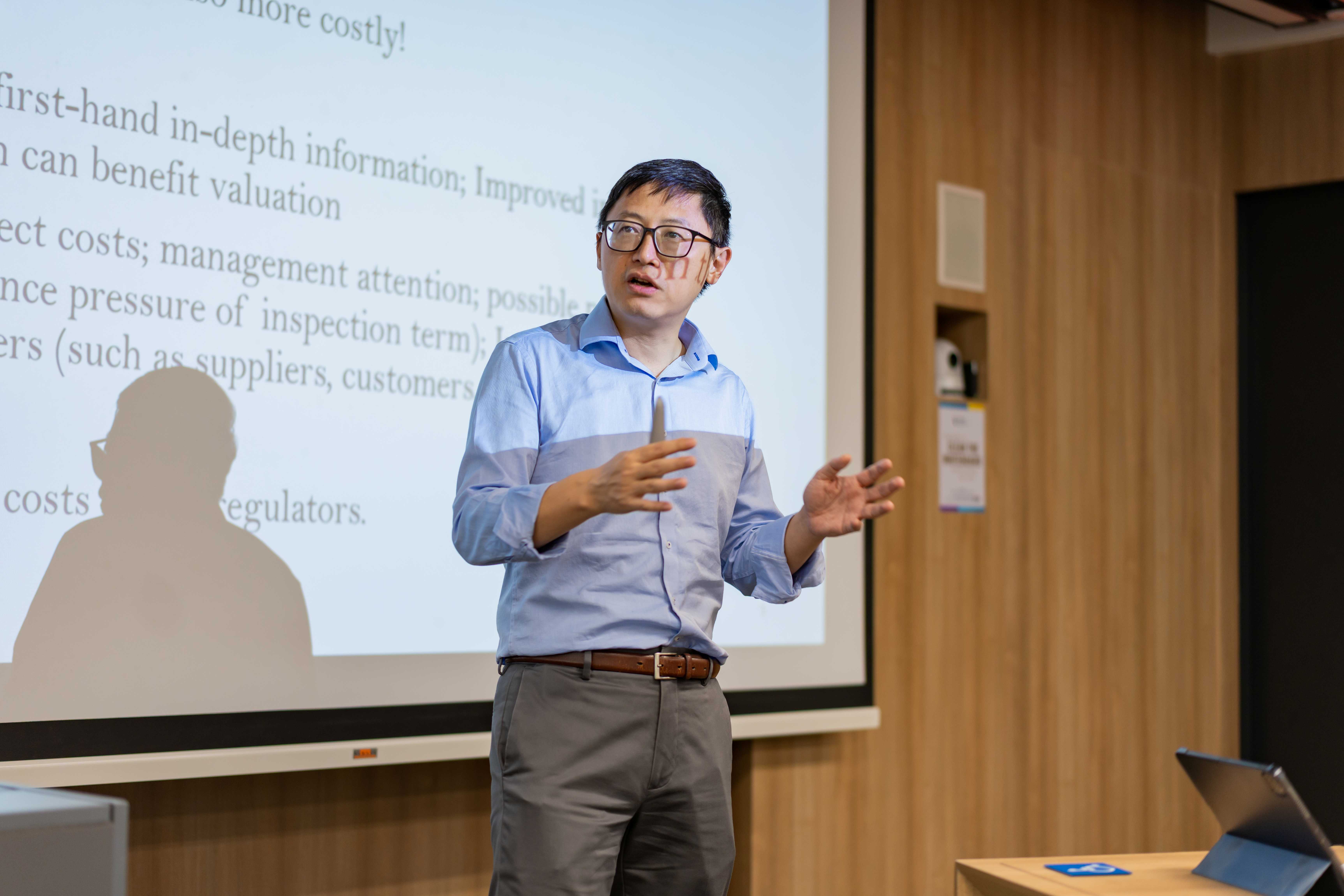
While on-site inspections are generally more effective, they can prove more costly, with public enforcement requiring regulators to foot the bill rather than private enforcement methods like lawsuits, Professor Yue explained in his presentation.
According to the data examined by the authors, the overall market reaction to the announcement of this policy when it was implemented in China was positive and significant. However, firms selected for inspection experienced negative stock market reactions, with this effect being more pronounced for firms that are known to generally be compliant.
This raised questions about the effectiveness of random selection, as compared to targeting firms that have a greater potential for misconduct.