
The Green Economy – one of the five pillars under the Singapore Green Plan 2030 announced in 2021, outlines Singapore’s goals of seeking new investments to be among the best-in-class in energy/carbon efficiency, as well as leveraging on sustainability for jobs and growth. (Source: https://www.greenplan.gov.sg/) Our Green Economy targets include developing the country into a a leading centre for green finance and services to facilitate Asia’s transition to a low-carbon and sustainable future, and establishing Singapore as a carbon services hub in Asia.
As the countdown to 2030 continues, there is a fast-growing demand for talent with skills related to sustainability in various fields. Recognising this, SMU has committed that all incoming SMU undergraduates from 2024 will need to attain an intermediate mastery of sustainability before graduation, by completing at least one course in the field. One such course would be Sustainability Accounting and Reporting offered at SMU School of Accountancy.
Launched in August 2022, the course presents a review and analysis of the theoretical foundations of sustainability accounting and its reporting issues in practice. The course also focuses on existing and emerging frameworks for developing corporate environmental, social, and governance (ESG) performance metrics, assessing their reliability, reporting to stakeholders, and incentivising managers based on ESG metrics.
Dr Holly Yang, Associate Professor of Accounting, course instructor for Sustainability Accounting and Reporting, tells us why knowledge in sustainability accounting is essential today, “Accountants have historically provided a stewardship role of firms’ economic resources, but our professionalism and skills also enable us to play a critical role in evaluating and managing their social and environmental risks. This can then help them develop more sustainable business practices.”
Echoing her sentiments, final year Accountancy student Ge Zhonghong explains why he decided to take up the course when it was launched, “Given that sustainability and ESG is gaining more attention, companies are emphasizing on sustainability reporting. We, as accountants, will mostly be tasked with providing assurance service to attest to the sustainability reports. In my opinion, the course is quite relevant to accounting students as it provides an introduction to the sustainability landscape. The course is also designed in such a way that we can gain insights to the key standards and framework in sustainability reporting.”
Through the course, students will have the opportunity to learn about the development of new and evolving trends in sustainability accounting and reporting frameworks. With the help of case studies and real-world examples, they will examine accounting for an organization’s environmental, social, and economic impacts via its activities, as well as how an organization is dependent on and affected by the environmental, social, and economic context in which it operates.
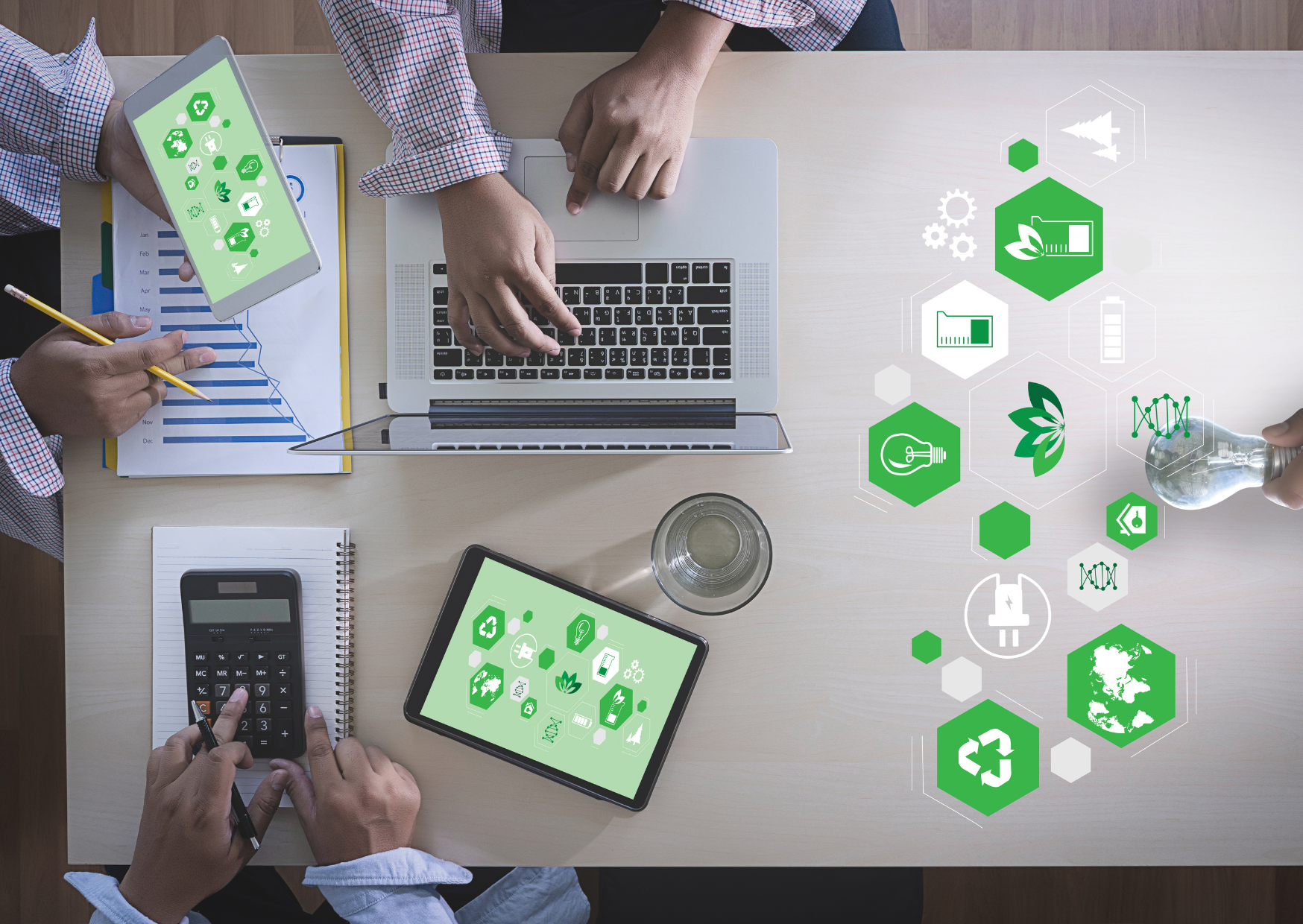
The Sustainability and Accounting Course features case studies and real-world examples for its students
Third year Accountancy student Ng Wee Kim, who also completed the course last term, found the currency of the content and use of real-life examples helpful, “I feel that the course is highly relevant to the accounting industry, especially with the increasing focus on how to ensure transparency and accountability of sustainability performance. The course helps to provide valuable insights into the current sustainability reporting frameworks and standards, as well as real-life application in practice.”
Today, there is a burgeoning industry demand for accounting graduates with an intermediate knowledge in sustainability. The Singapore Accountancy Commission (SAC) has projected a need for about 6,000 to 7,000 new accountants, with accounting expertise in the valuation of new growth areas such as ESG, by 2025.
To address this demand, SMU School of Accountancy aims to groom a new generation of accounting graduates well-suited for existing and upcoming positions in sustainability. At the same time, integration of sustainability into the accounting curriculum will also offer more opportunities for accounting students who aspire to pursue a career with meaningful impact.
Visit our Bachelor of Accountancy curriculum structure to learn more about the Sustainability Accounting and Reporting course.
Common acceptance ends on 24 May 2023. Accept your offer today!